Introducing the Thurston TA16 Seafire
The Next Evolution in Multi-Role Amphibious Flight

About Us
The Thurston Aeromarine name established in 1976 by founder and designer David Byron Thurston. Anyone with an interest in seaplanes, flying boats, amphibians, aircraft design and aviation safety will recognize the name David Byron Thurston. He was, together with designers such as Percival H. “Spence” Spencer, Molt B. Taylor, Herbert P. Lindblad, Volmer Jensen and Leroy Grumman, one of the most influential post WWII amphibian aircraft designers. Thurston was also the author of several well-known aviation books.
Thurston is known for designing a range of amphibians originating from his own Colonial Aircraft Corporation C-1/C2 Skimmer amphibians in 1946, which evolved into the Lake LA-4 under Lindblad’s guidance, the Thurston Teal and more recently the Thurston TA16 Seafire.
Thurston Aeromarine Corp has harnessed the great David Thurston design heritages with the dynamic addition of modern tools, a modern organization and a world-class engineering team, enabling a painstaking constant stream of amphibian aircraft, design upgrades and improvements. The results of this effort materialize in state-of-the-art, rugged, reliable and versatile amphibian aircraft, with appreciated flight characteristics.
Design
WING DESIGN
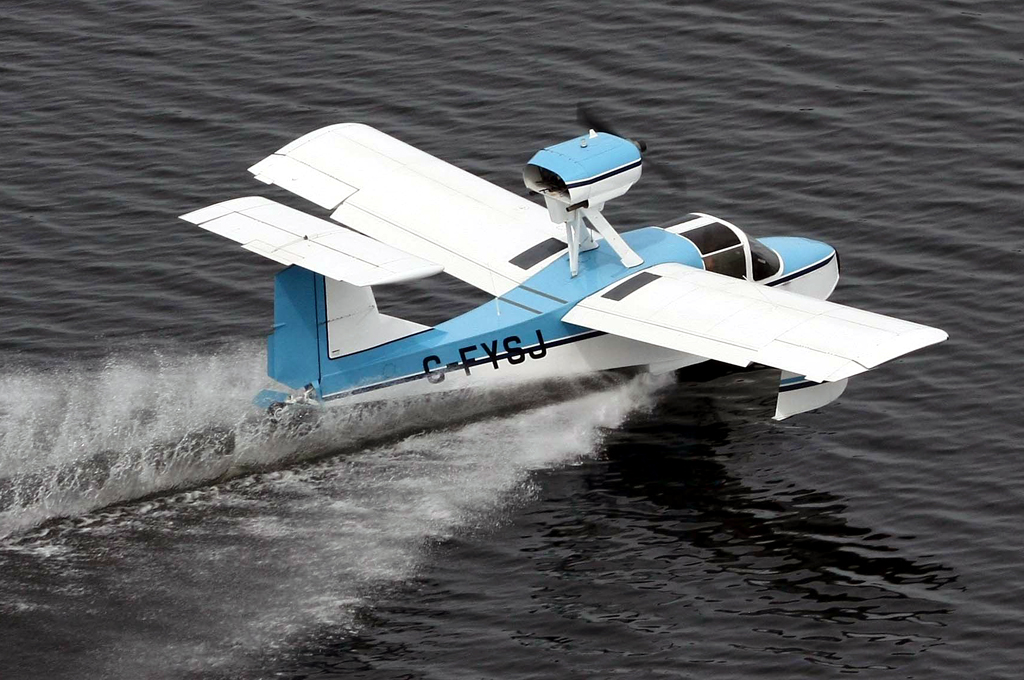
The wing is designed for slow approaches and a stall speed of 48 Kts VS1 and 61 Kts VS0 while still offering a maximum cruise speed of 152 Kts. The specially designed composite wingtips reducing drag and enhancing fuel efficiency improving stability and maneuverability.
WING FLOATS
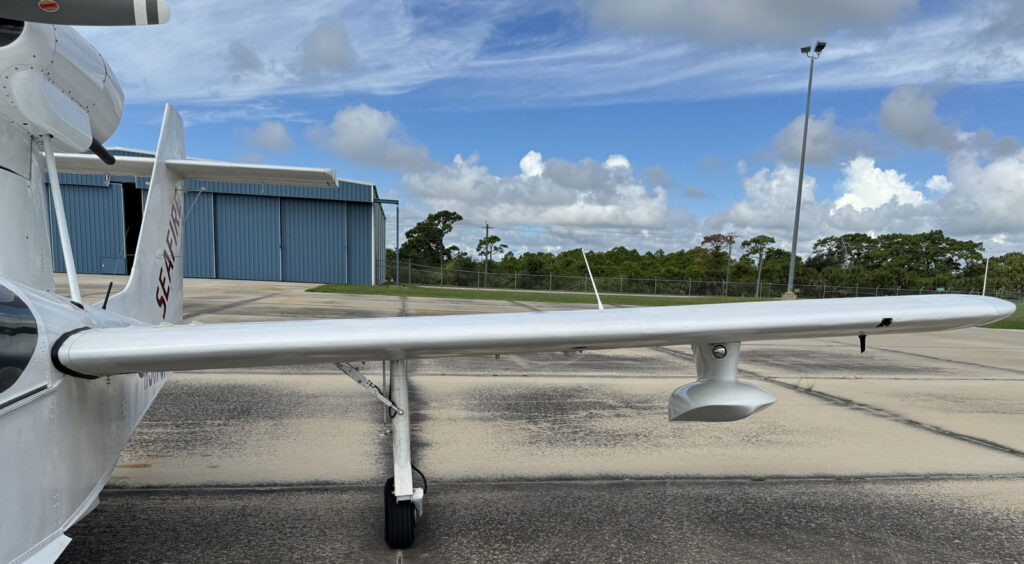
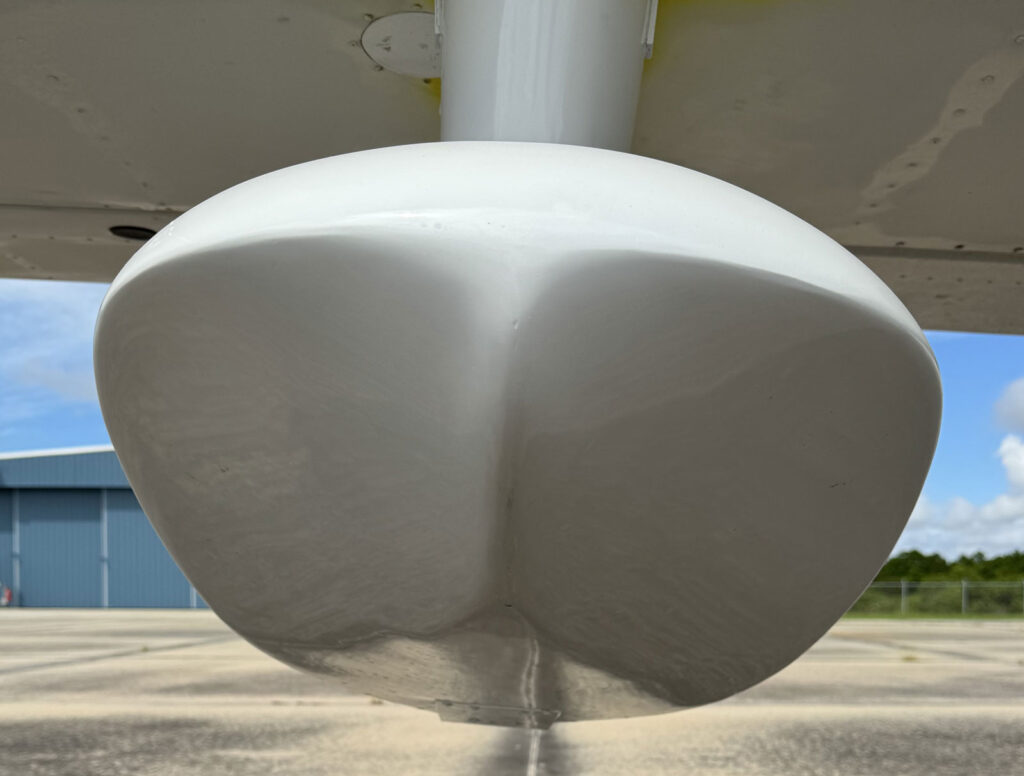
Composite wing floats are attached to each wing; these give the ability to perform step turns of small radius in order to operate in small bodies of water. Designed to break away without wing damage in the event a log or other submerged object is struck during water operations. If desired, the floats may be easily removed for winter operation in snow country.
Landing Gear
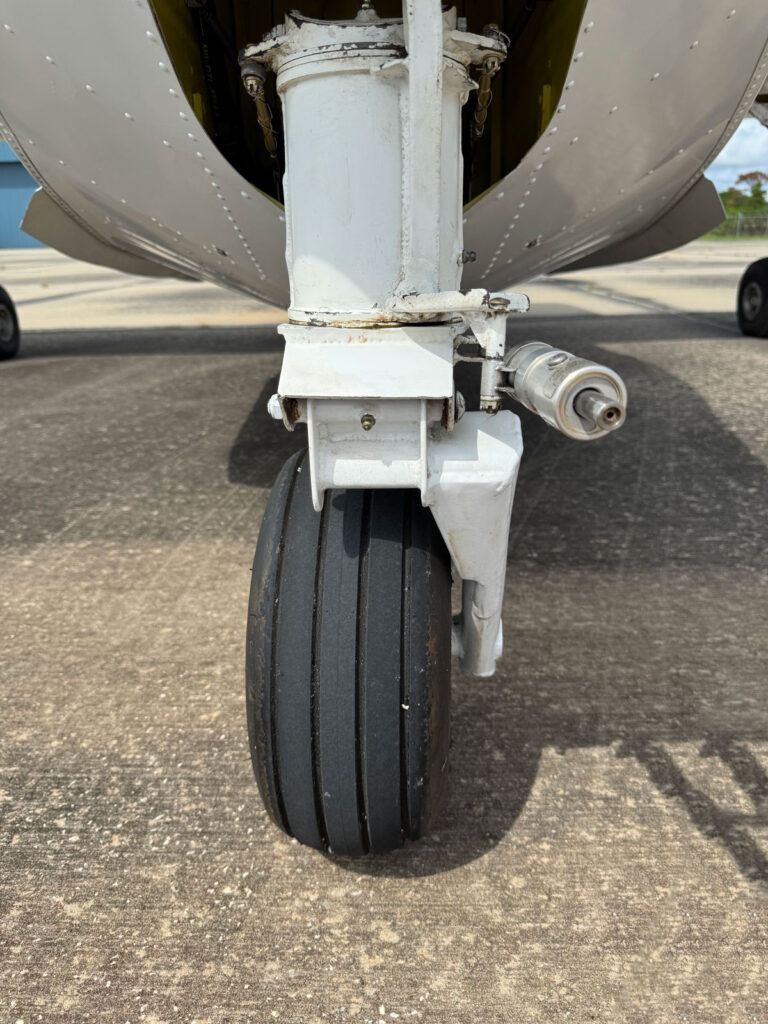
A true amphibian, the Seafire is at home on land as well as on water. Its wide-track hydraulicly operated landing gear ensures smooth landings on runways. The aircraft comes with stainless steel cable operated nose wheel steering and hydraulically controlled nose wheel centering with retraction system. No nose-gear doors to foul. Nose wheel doubles as a Docking Bumper.
Propulsion
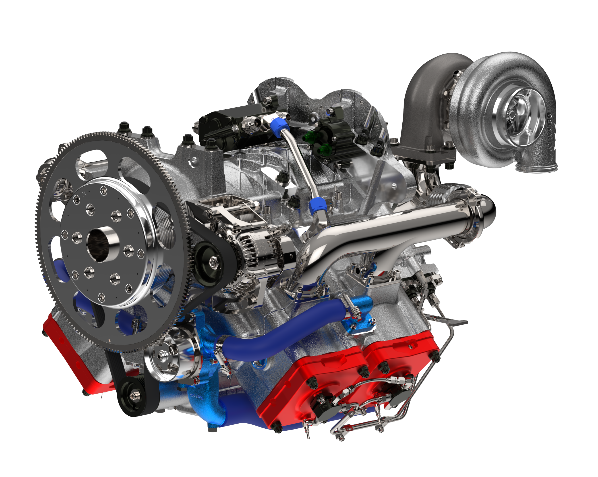
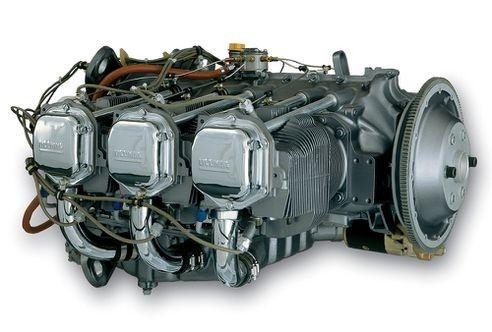
TA16 standard propulsion package is Lycoming IO-540 260HP (194Kw) with constant speed Hartzell 80” propeller. TA16D propulsion package is DeltaHawk DHK4A235 235HP (175.2Kw) SAF/Jet fuel with MT-Propellor reversible 3-blade propeller.
Approximately 35-40% more fuel efficient than AVGAS engines, simple maintenance, direct drive (no gearbox), low parts count for lower overhaul costs.
The higher acquisition cost of hybrid propulsion aircraft can be quickly amortized, given their low operating costs. By going engine-electric, we tackle two of the biggest cost factors: the fuel cost and the maintenance cost.
Propulsion
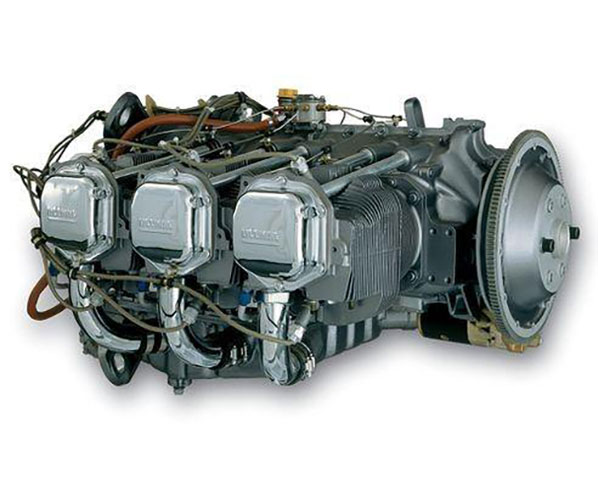
TA16 standard propulsion package is Lycoming IO-540 260HP (194Kw) with constant speed Hartzell 80in (203.3cm) propeller.
TA16D propulsion package is DeltaHawk DHK4A235 235HP (175.2Kw) SAF/Jet fuel with MT-Propellor reversible 3-blade propeller.
Approximately 35-40% more fuel efficient than AVGAS engines, simple maintenance, direct drive (no gearbox), low parts count for lower overhaul costs.
Hybrid propulsion under development.
The higher acquisition cost of hybrid propulsion aircraft can be quickly amortized, given their low operating costs. By going engine-electric, we tackle two of the biggest cost factors: the fuel cost and the maintenance cost.
Materials
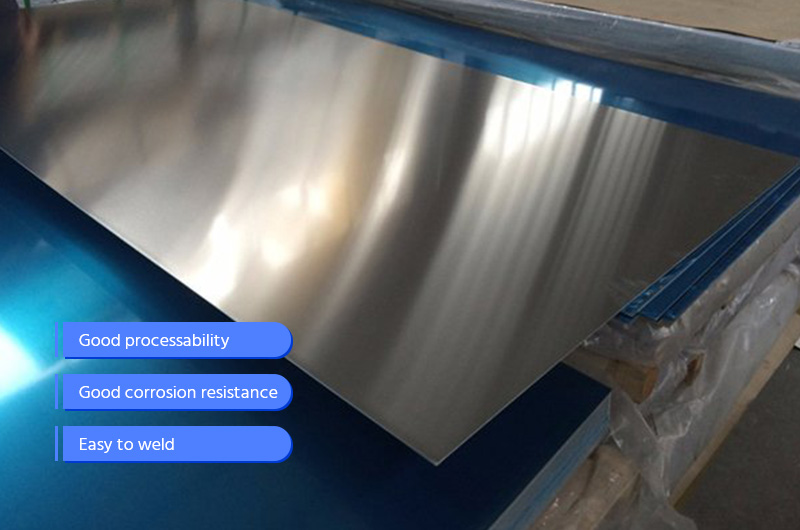
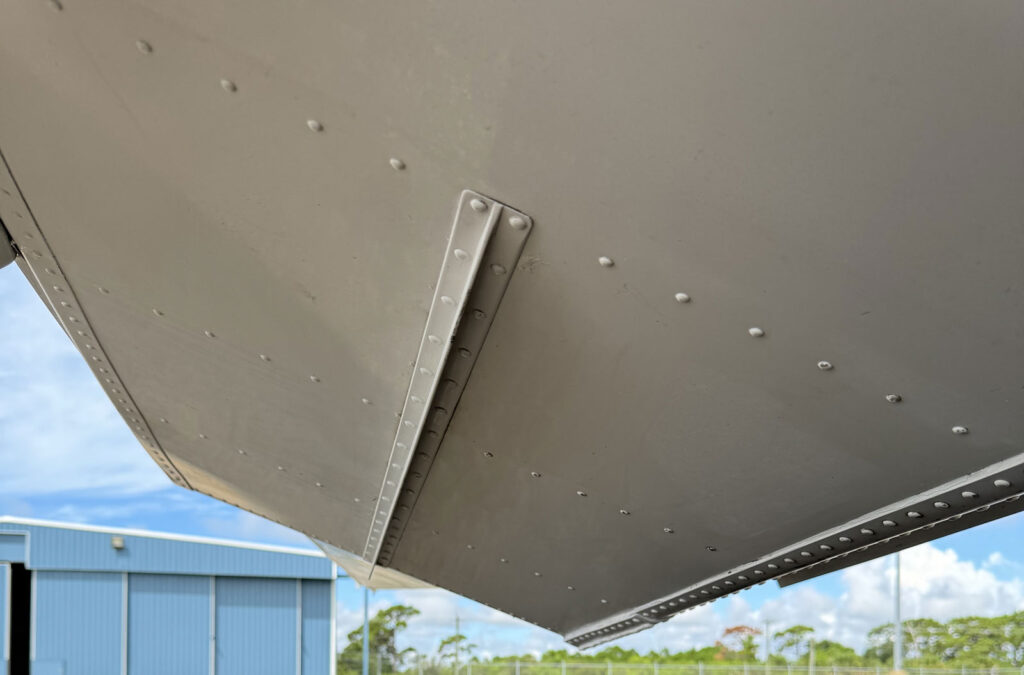
The Seafire’s design employs riveted Alclad aluminum structure with chemical conversion coating for maximum corrosion protection. Forebody bottom plating is .050” thick, with the riveted structure sealed along the keel, chines, and step joints.
The passenger compartment is designed to provide protection from a 20g forward impact load condition. Bow deck skins are composite.
Alclad aluminum delivers better durability and repairability resulting in life cycle costs much lower than composite design. Aircraft can remain in service indefinitely if properly maintained
The slightest damage on the surface of a composite aircraft must be inspected for interior damage. The resin in composite aircraft becomes brittle with age. Even if meticulously maintained, a composite airframe must be retired after 20-25 years.
Shape
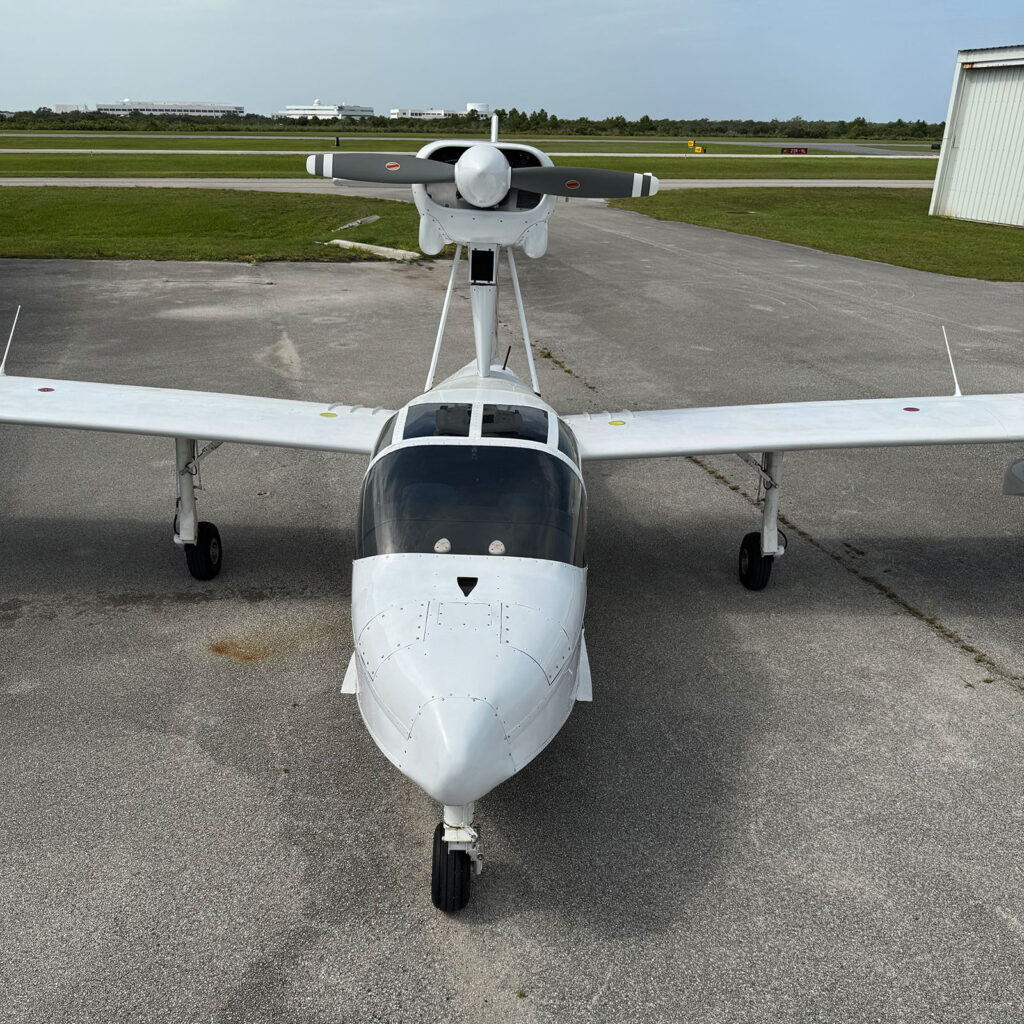
Unlike competitors with floats, the Seafire is a flying boat. Its deep V-Keel hull lines, step location, and integral step-area strakes permitting high speed water turns allow the Seafire to handle heavier water (up to two feet chop) and steeper seas than any other designs. Seafire demonstrates impressive agility on water.
Cockpit
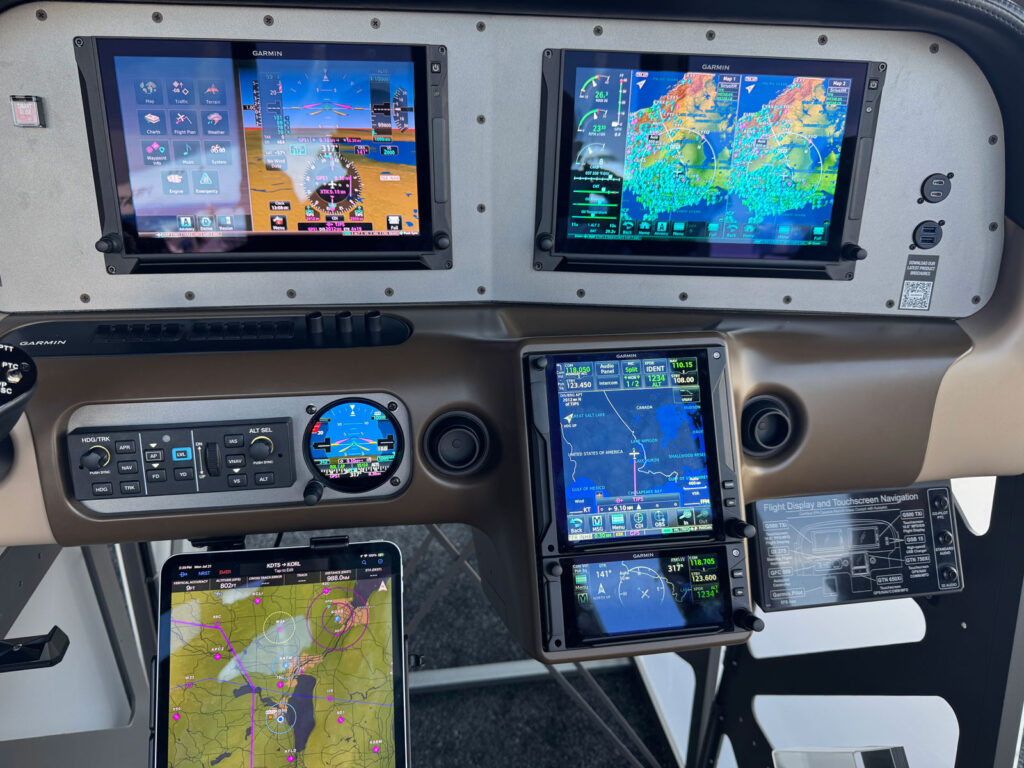
The Seafire cockpit features Garmins’s state-of-the art G500 TXi avionics suite with advanced vision, communication, navigation, surveillance, air traffic management systems.
The Seafire Cockpit Features Include
- The Seafire’s ergonomically configured flight deck reduces pilot workload by providing a full digital cockpit. This aircraft is ideally suited for VFR and IFR flights
- Two 10″ LCD Displays providing all flight information in an easily readable layout. They are installed in one line making a full situational awareness for both, pilot and co-pilot
- A third independent working backup display provides necessary flight parameters even in the case of an electrical power failure
- Intergrated Garmin GFC 500 digital autopilot, easing the pilot’s workload.
- Excellent visability.
The Seafire Cockpit Contains
- Next-generation flight deck technology, Greatly simplified navigation with graphical flight planning
- Integrates virtually all avionics, bringing high-resolution glass displays, faster processing, smooth flight control and HSI mapping to your flight deck
- Equipped to meet and exceed airspace modernization initiatives for ADS-B and more
- Enables WAAS LPV approaches into thousands of airports — with Visual Approach capability for autopilot-coupled glidepaths to pilot-selectable minimums
- Optional Connext® connectivity adds worldwide weather, voice calling and text messaging plus database and flight plan transferring with tablet or smartphone interface. Safer flights with alerts during taxi, take-off, landing.
Cabin
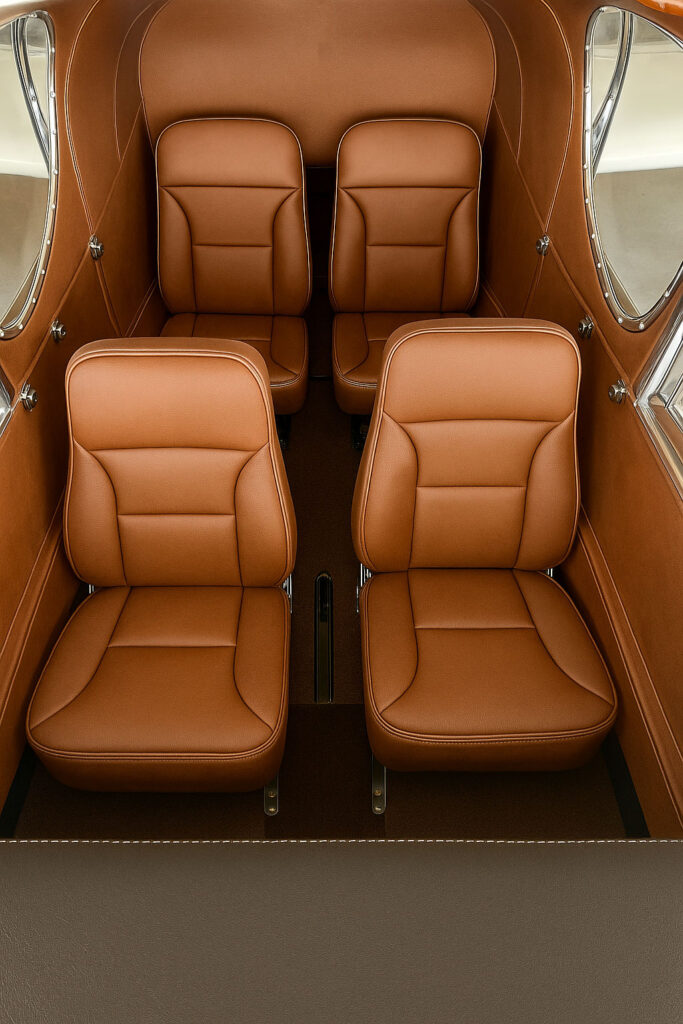
The Seafire offers the most versatile and spacious cabin in its class, ensuring passengers a comfortable ride and an enjoyable experience. The forward canopy slides back over the rear passenger area, and then both enclosures can be rotated together about hinge points on either side depending upon the dock location. This feature permits easy access to the entire cabin length for boarding, loading, or fitting a stretcher.
Executive Configuration
- 4 comfortable seats (including pilot)
- Ergonomically designed interior
- Cabin wide flat floor
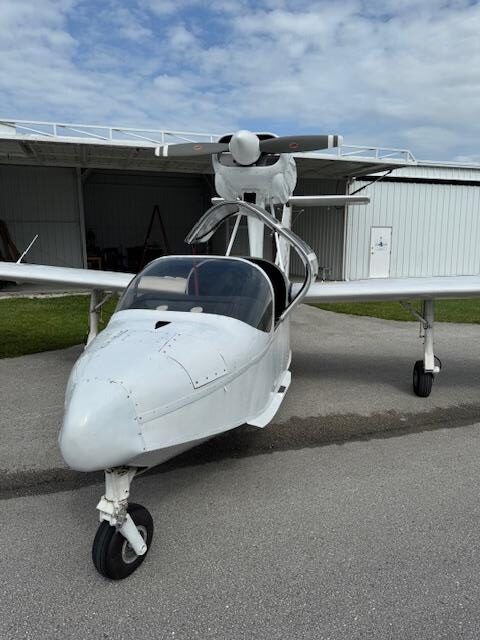
Ambulance Configuration
- Advanced amphibious mission platform
- Multi versatile mission equipment integration
- Ergonomically designed interior
- Cabin wide flat floor
Cargo Configurations
The flat floor provides space for customized cargo or cabin installations. In a cargo configuration, the aircraft offers 64.3ft³ (1.82m³) of available cargo space with a maximum length for bulk cargo of 6.5 feet (2 meter).
Mission
The Seafire is a multirole amphibian aircraft delivering unmatched versatility at low operating costs. It covers a wide operational range of VIP-transport, commercial, governmental/special and corporate missions. Just tell us your requirements and we will tailor the Seafire to meet your demands.
VIP Missions
The Seafire is the ultimate amphibian for discerning owners looking for a comfortable and sound performer on water as well as on land, providing you with fast access to yachts, waterfront property, isolated lakes, ocean bays and island coves or just airport to airport connections. Whatever the destination – the Seafire is the safest and most enjoyable way to get there. The executive interior offers ergonomically designed seating. A sliding canopy allows for easy passenger boarding and cargo loading.
Commercial Missions
Able to operate on water or land, the Seafire provides unforeseen flight opportunities for commercial operators. Its “flying boat” design enables landing in sea states with up to two-foot waves. Moreover, due to the Seafire’s ability of using a ramp to transition between water and land, passengers may board the aircraft without the need of an airport. Direct operating costs are significantly lower compared with aircraft of its size, with diesel engine option and significantly reduced maintenance cost.
Governmental and Special Missions
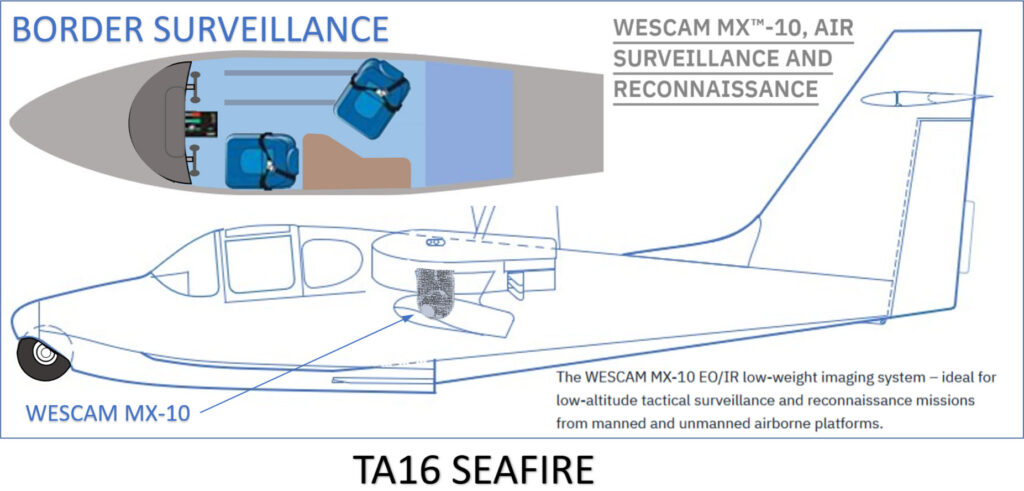
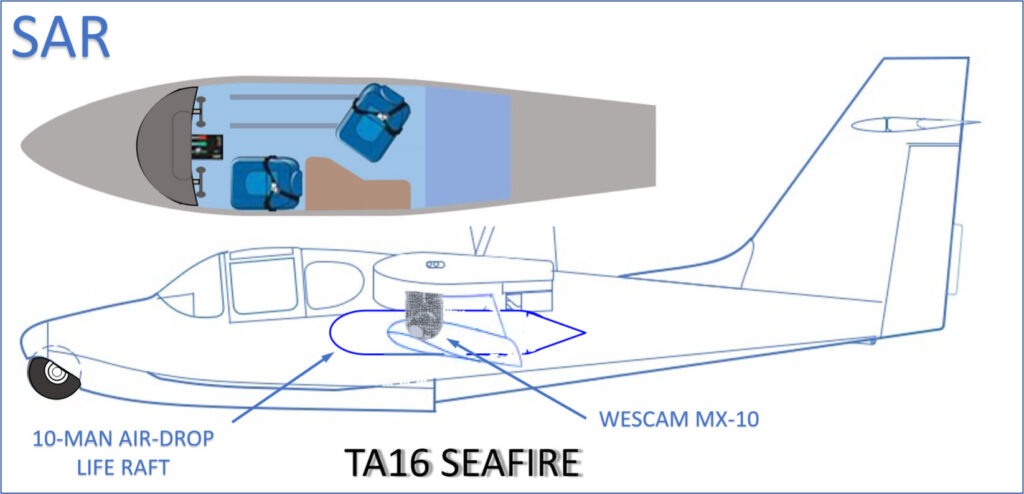
The Seafire is the ideal aircraft for operations such as coastal surveillance, patrolling, environmental control, fisheries protection, emergency medical services, search and rescue, drug interdiction and disaster relief, to name a few. Used as a multi-role platform the Seafire is able to perform the combined operational tasks usually requiring both air and seaborne assets. This ability to combine asset tasking will produce faster response times, increase operational flexibility and reduce costs in comparison with the use of existing fixed wing, helicopter and seaborne assets.
Advantages
The engineering principles of the Seafire lead to a series of advantages compared to conventionally designed aircraft. The areas of particular improvement are performance, safety and operating economics when compared to helicopter or conventional aircraft.
Performance
With a maximum cruise speed of 152 Kts, the Seafire is faster than any flying boat competitor. The powerful Lycoming IO-540-E4A5 engine provides Seafire with 260 horsepower, allowing the aircraft to become airborne quickly with take-off runs of only 650ft (198m) on land and 850ft (259m ) on water.
Operation over 50ft (15m) obstacle @ MTOW:
- Takeoff Run: land @ sea level – 1000 ft (305m)
- Takeoff Run: water @ sea level – 1200 ft (367m)
Operating Economics
In terms of direct operating costs, the Seafire is the most economical aircraft in its class. The Alclad, chemical conversion coating corrosion-free boat hull significantly reduces maintenance cost compared to other composite aircraft. Due to its manufacturing quality and durability, the residual value is poised to be significantly higher than that of composite aircraft.
Safety
The primary reason for the existence of amphibian aircraft may be summed in one word; Utility. A close secondary reason is Safety. Seafire is equipped with proven and highly reliable IO-540-E4A5 260HP (194Kw) engine. The all-metal wing is of constant cord, single main beam type having a leading-edge torque box. Fuel stored in the integral leading-edge tanks provides relieving load in flight, and it also permits ready preflight inspection of fuel quantity. The Slotted Flaps are manually operated and are designed for water load conditions. The “boat hull” is able to cope with rough sea conditions. The Seafire design has ailerons of the Frise type for minimum adverse yaw and maximum response in cross wind conditions. Design, includes a deep V-hull and hull strakes for the Seafire’s impressive agility on water.
Durability
The Seafire was designed in Maine USA by world-renowned David B. Thurston. Anyone with an interest in seaplanes, flying boats, amphibians, aircraft design and aviation safety will recognize the name David Byron Thurston. Seafire strictly adheres to Thurston’s high-quality standards. The hull is resistant to extreme environments, even when the aircraft is left in saltwater areas. Over life, it is resistant and far more durable than composite aircraft. The rugged hull bottom resulting from water load design requirements offers added protection in the event of a forced landing away from water or a suitable field. This is a real safety item of benefit to bush operators.
Maintainability / Versatility
Conventionally designed aircraft and helicopters require a high level of time-consuming maintenance. The Seafire was systematically designed to reduce complexity in the field maintenance and allows operators to focus on missions. Seafire’s foredeck/windshield assembly and engine cowlings are quickly removable. The Seafire is durable in an economical sense, by combining the advantages of performance, efficiency and safety.
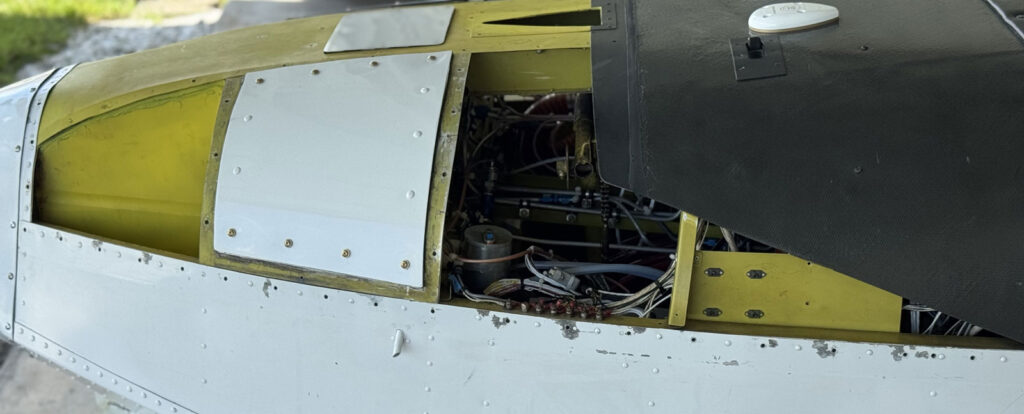
TA16 in action
Production
Practical and Safe
The sharply “V” bow lines, step location, and integral step-area strakes permitting high speed water turns allow the Seafire to handle heavier water (up to two feet chop) and steeper seas than any of these prior designs. When considered that this renew amphibian is capable of cruising over 140 Kts with 1200 pounds of useful load, climbing over 1000 feet per minute, and landing at 44 Kts, the advantages of laminar flow wing and tail surfaces plus large-Slotted Flaps become quite apparent. With 90 U.S. gallons of fuel carried in wing leading edge tanks, the Seafire has a cruising range of over 1000 miles in standard air conditions with fuel reserve.
Highest Quality Craftsmanship
TA16 Seafire employs in-house aluminium and composite production and quality inspection of the major airframe components including the wings and fuselage.
Certification Seafire
TA16 Serial Number 002 – Cert Test Aircraft
The TA16 Seafire S/N 002 aircraft used in the certification process to date, assembly number 81-001, was just four (15%) from FAA FAR Part 23 Certification. Airframe total time 130.2 hrs.
The remaining four FAA approved tests for certification to be completed were:
- Spin testing for the latest wing float configuration
- Fuel Tank Slosh Testing
- Dynamic Seat Crash testing
- Landing Gear drop testing.
TA16 Serial Number 002 – Exhibition R&D
Since proving itself as a flight test vehicle, it has been completely refurbished and upgraded with a modern Honeywell BendixKing avionics suite.
- AeroVue Touch SmartView synthetic vision
- AeroNav 900 full-featured GPS/FMS/NAV/COM
- AeroNav 800 full-featured GPS/FMS/NAV/COM
- AeroPanel 100 audio system
- AeroPoint 200 engine monitor
- AeroCruze 230 autopilot
Technical Specifications
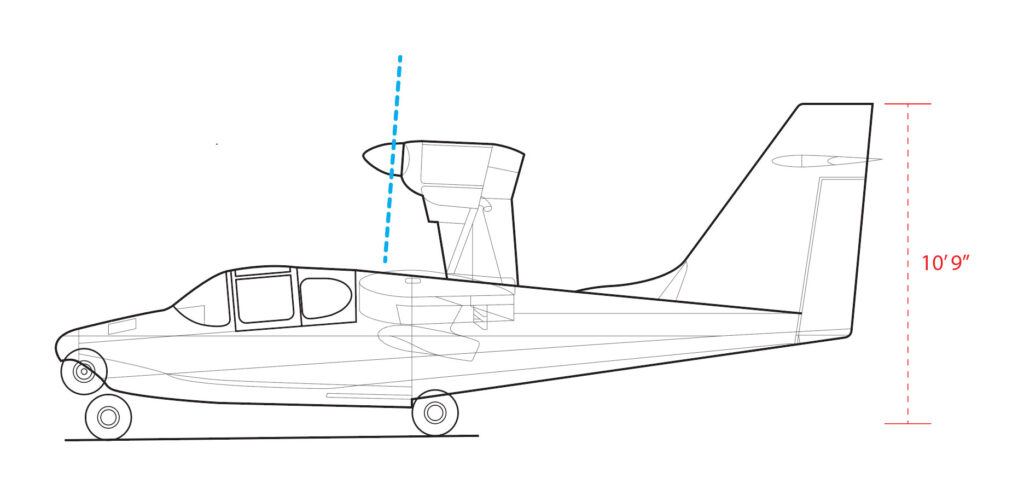
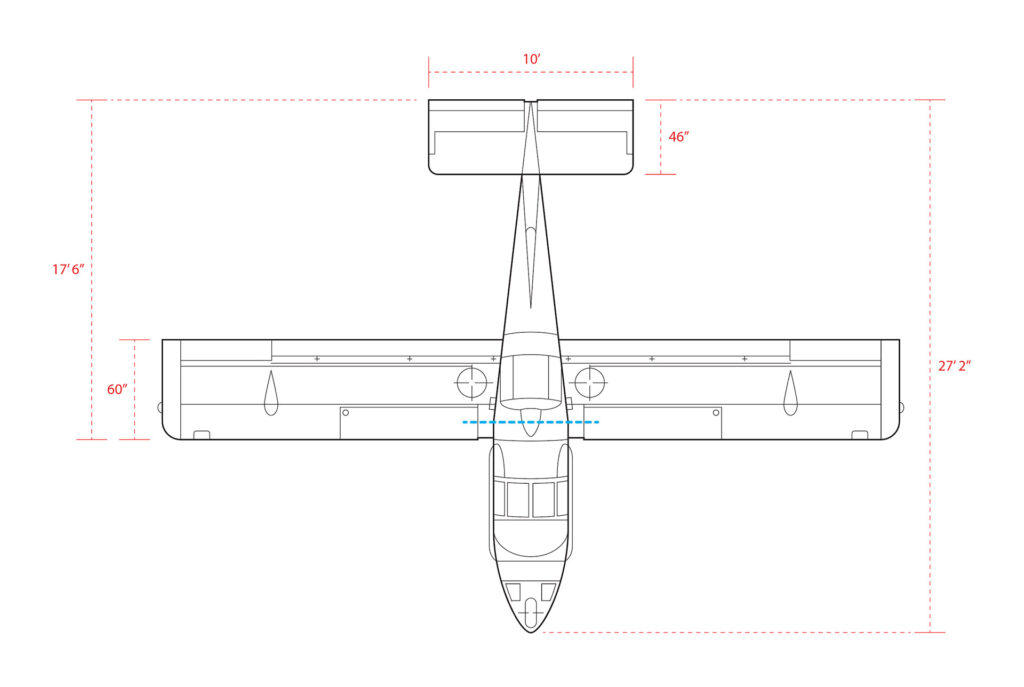
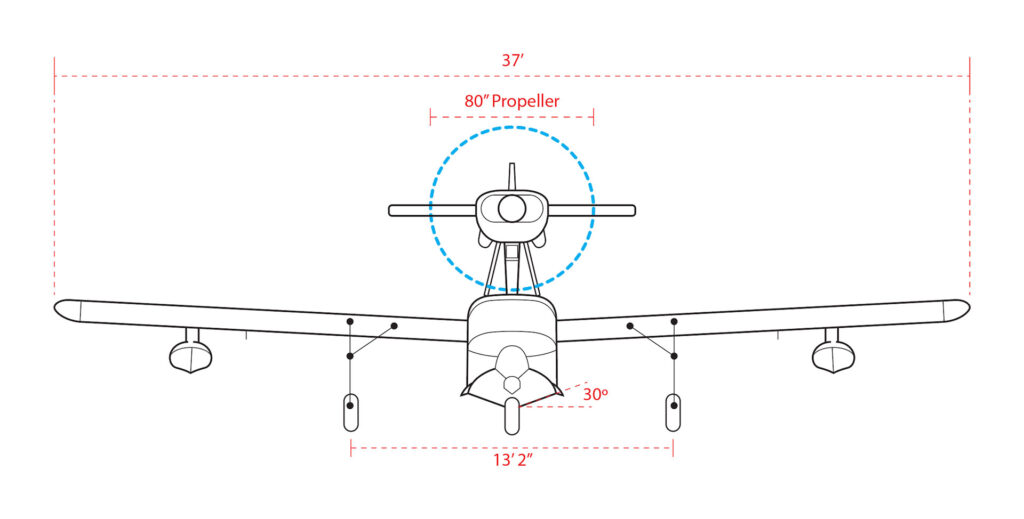
Detailed Specifications
Secure Position Reservation
|
Model |
Delivery |
Est. Purchase Price |
Serial Number |
|---|---|---|---|
|
TA16 Lycoming 260HP |
1st quarter 2028> |
$996,000 |
005> |
|
TA16D DeltaHawk 235HP Diesel SAF/Jet-A |
4th quarter 2028> |
$1,198,000 |
003> |
At the manufacturer’s discretion, pricing and equipment is subject to change without notice
All data and information’s published within this website are preliminary and subject to change without any notice. Performance data is based on the standard Seafire configuration, operating in International Standard Atmosphere (ISA) conditions with zero wind. Takeoff and landing field lengths are based on a level, hard surface and dry runway.